
Abadar
Cities, law and wealth
Temples finance public works, safeguard deposits and witness agreements. Their influence is greatest along the imperial roads and in commercial towns.
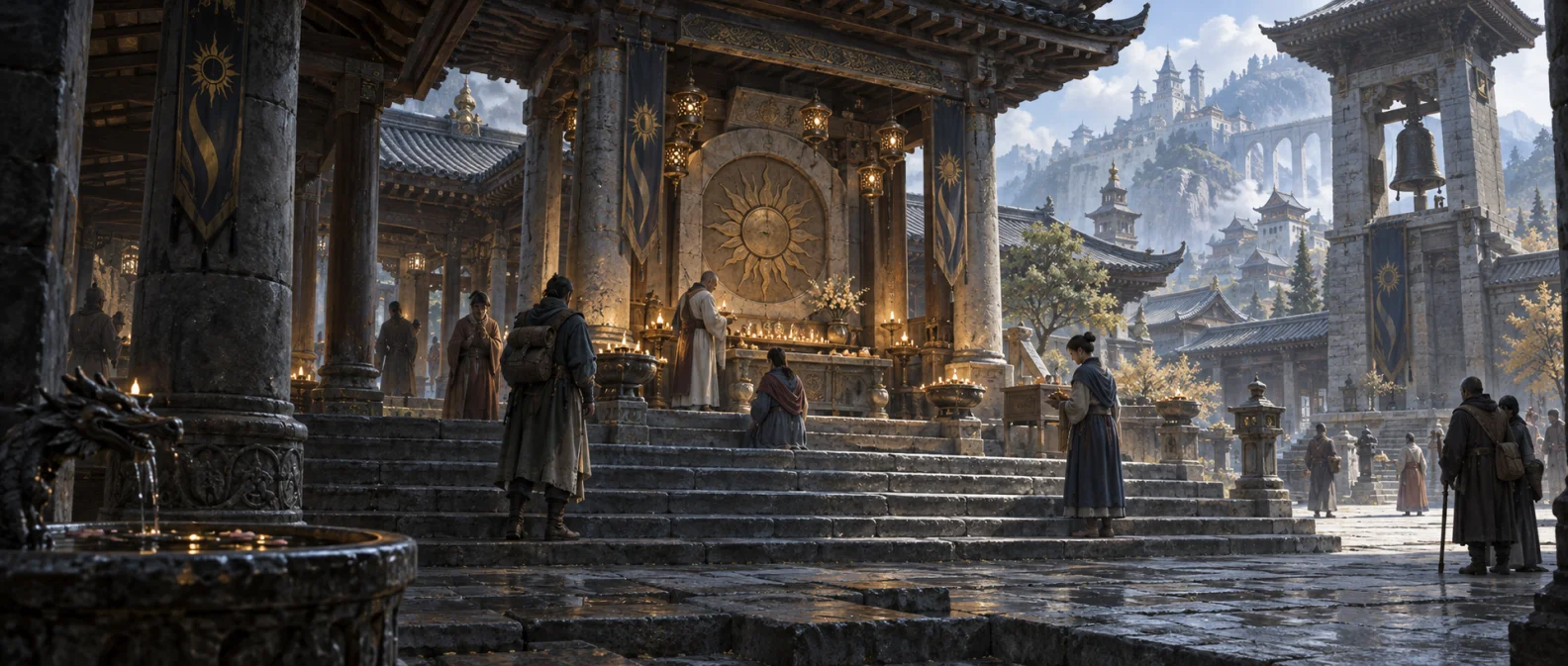
The lands of the Dragon Empire worship the Pathfinder pantheon. Abadar’s church is the most influential in imperial public life. Regional temples appoint their own leaders and manage their own affairs. Churches serve congregations across the boundaries of ruling houses. A household may honour several gods, turning to each for different occasions.
Cities, law and wealth
Temples finance public works, safeguard deposits and witness agreements. Their influence is greatest along the imperial roads and in commercial towns.
Birth, death and fate
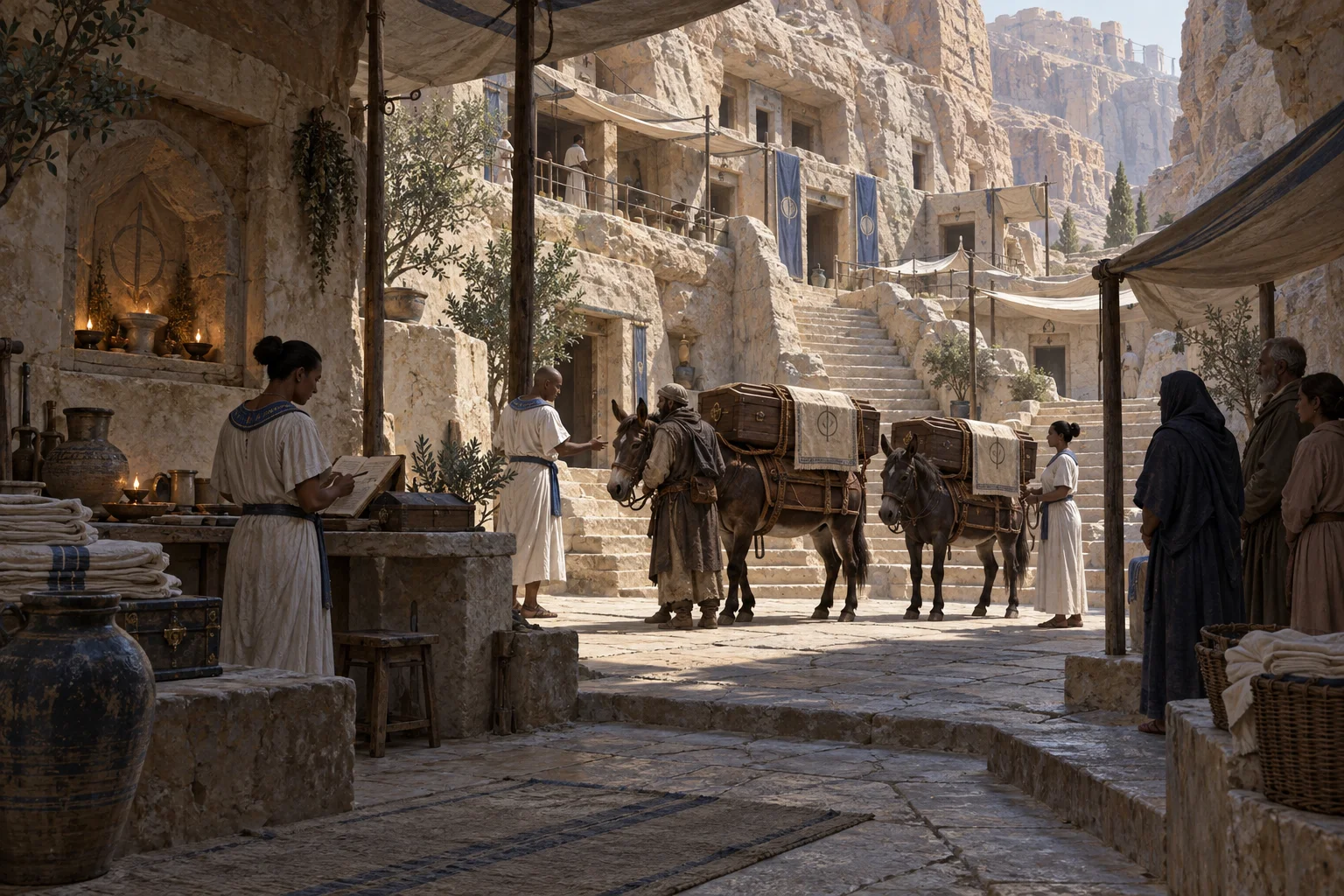
Pharasmin midwives and burial orders serve communities throughout the lands. The eastern canyons hold major religious centres. Burial orders negotiate passage through lands at war so they can transport and bury the dead.
Sun, healing and redemption
Healing houses and sanctuaries support communities rebuilding after war. The faith is especially influential in the east. Its clergy teach that people seeking forgiveness should make amends for the harm they have caused.
Forges, protection and strategy
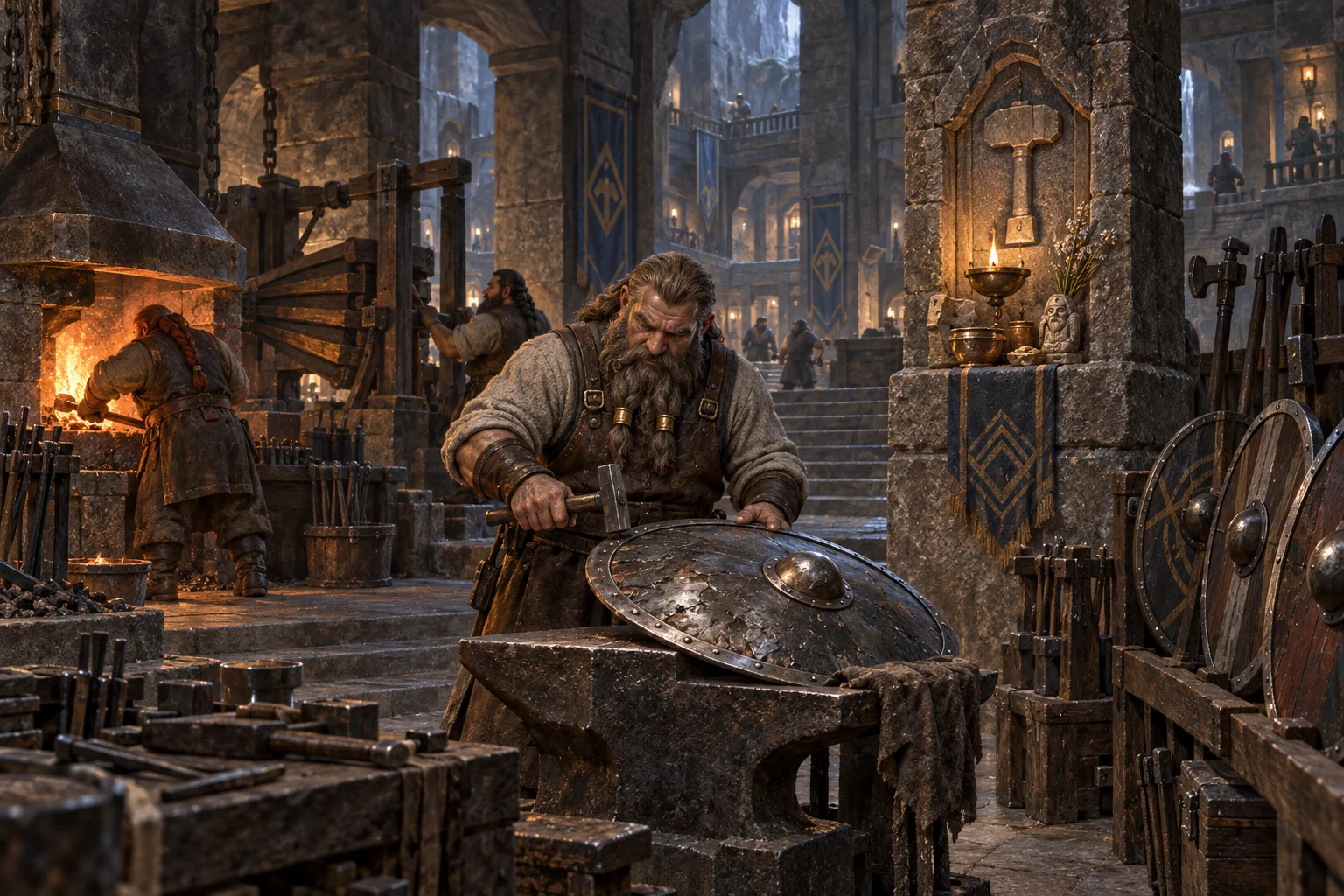
Temples serve dwarven mountain settlements, forge towns and fortified communities. The Kazdrunn maintain the strongest regional tradition, with worship closely connected to clan life and defence.
Nature, weather and the sea
Coastal settlements and river communities make offerings for safe voyages and favourable weather. Local temples are also involved in disputes over projects that could damage nearby waters and forests.
Dreams, stars, travellers and luck
Roadside shrines and pilgrimage routes serve travellers passing through the territories of several ruling houses.
Family, farming and hunting
Village shrines serve farming and hunting communities. Local households support the shrines, and priests represent their concerns when military levies threaten the supply of farm labour.
Magic
Religious colleges and temples support magical learning and preserve knowledge. Their clergy disagree about who should be taught particularly powerful forms of magic.
The six cultures are overlapping traditions with distinct homelands. These entries describe concentrations of worship; congregations of other faiths live throughout the regions. The Elder Reaches are scattered elven realms.
Aurelmarch and the imperial road network
Abadar, Iomedae, Nethys
Civic temples, military chaplains and endowed colleges. Iomedaean orders challenge officials over wars the law permits.
Rookenmarsh, western forests and slow rivers
Erastil, Gozreh, Pharasma
Village worship, river offerings and burial customs maintained by local families.
Yatsuhoshi, southern forests and islands
Shizuru, Desna, Shelyn
Court temples, travelling shrines and religious patronage of the arts coexist with local tengu and kitsune traditions.
Pardah Reach and the eastern tomb-caverns
Pharasma, Sarenrae, Nethys
Burial orders, healing sanctuaries and colleges preserving ancient knowledge. Natron Eleven, an association of eleven burial orders, forms a major Pharasmin institution.
Hookford Saltings, the northern coast and great gulf
Gozreh, Cayden Cailean, Torag
Worship accompanies voyages, communal feasts and the defence of settlements. Besmara has substantial followings in particular ports.
Anvil Stair and Emberdeep
Torag, Pharasma, Abadar
Clan temples and ancestral burial chambers stand alongside merchant shrines on underground trade routes.
Scattered elven forests, coasts and river valleys
Desna, Shelyn, Calistria
Long-established sanctuaries preserve traditions predating the Accords. Each maintains its own relationship with neighbouring courts.
Apsu has an influential following among dragons and mortals who believe a Wright has obligations to the people it governs. His orders teach that dragon rulers must protect the people they govern.
Dahak attracts those who seek to expand draconic domination through destruction. His followers oppose the restraint imposed by the Accords, the treaty limiting war and territorial expansion among dragon rulers.
Asmodeus has established churches in some authoritarian realms. His clergy teach obedience and defend hierarchy through carefully written law. Their public standing varies between houses.
Milani has a visible following in organised resistance to oppressive rulers. Arazni is honoured among survivors of abuse and communities recovering from a ruler’s cruelty. Both faiths have influential followings despite their modest temple holdings.
Church membership crosses political boundaries. A temple may depend on a local house for land while its clergy answer to an order whose congregations live in several rival realms. Conflicts over sanctuary, military service and access to burial grounds consequently involve authorities beyond the local court.
The Accords protect signatory dragon bloodlines and restrict how their rulers wage war. Mortal subjects bear much of the cost of the warfare that remains lawful. Churches disagree about whether the treaty’s protection justifies accommodating that violence. Branches of the same faith can take opposing positions.
Several churches claim that the Accords express their god’s purpose. The divine origin of the Emberwright Forge remains unknown. Its responses to treaty business provide grounds for competing religious interpretations.
The dispute already affects burial. Caelithil’s chaplains condemn the Accords as a settlement with evil. Dunmoral’s temple authorities have barred Caelithil’s dead from the Sunjara burial passages for sixty years, forcing their funeral processions onto a more expensive route.
Deities follow the Pathfinder 2e pantheon; the religious geography and institutions described here belong to this campaign. Pathfinder deity reference.