
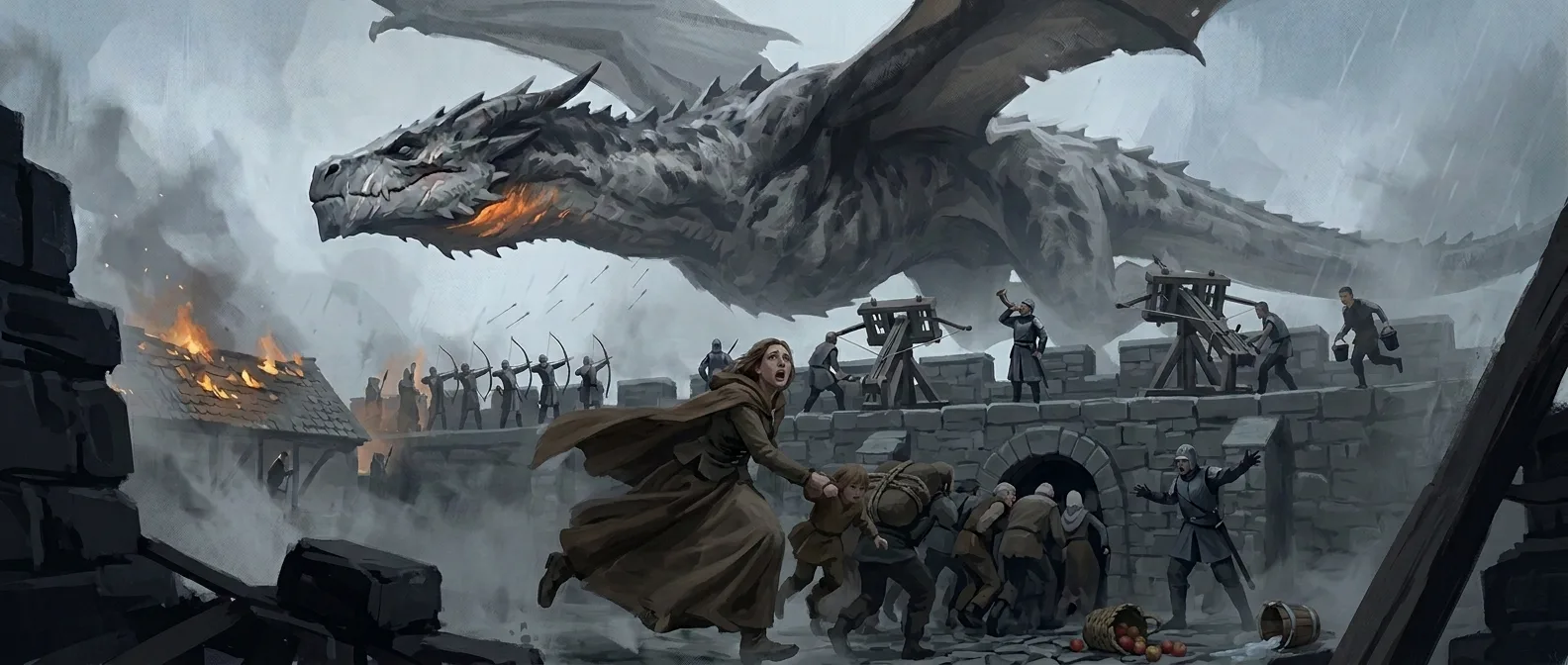
The Draconic Empire
The plated houses run two institutions. The Ring is the treaty order: eighty-one plates, one vote each, and no business but the terms and the precedent built on them. The Table is the standing assembly that handles everything else — money, borders, armies, statute, and dealings with powers outside the Accords. Seats there are apportioned by how much a house holds, so they are unequal, and they change.
Together the two are what people mean by the empire. It has no emperor and no way of enforcing its own decisions. Its formal name is the Common Table of Signatories, and members call it an empire, a congress or an imposition depending on what they want from it.
III.1 · Why it exists
Clause II limits a dragon to the land it can personally overfly in a day. It says nothing about land held by a group of dragons together, and the empire exists in that gap. It is the legal owner of everything no single dragon is allowed to own: the Forge and its district, roads and river passes held in common, joint garrisons, and any territory found beyond the settled map.
The rest of its business accumulated around that over roughly four centuries. A body that could hold land in common turned out to be able to hold quotas, contracts and charters in common as well. Houses opposed to the Table describe it as a device for holding land Clause II forbids. The description is accurate, and its supporters do not really dispute it.
III.2 · The vocabulary of the floor
- Weight
- One vote at the Table. A house holds between one and six, set by its assessed size. Weights are physical: small cast-iron tokens kept by the house’s delegation, which is where the name comes from.
- Division
- A vote. Each delegation puts its tokens into one of the two pans of a balance on the floor, and the heavier pan carries.
- Band
- The size class a house is assessed into. The band decides how many weights the house gets, and it is published without the figure behind it.
- Assize
- The survey that reassesses every house and reissues the tokens. It runs on a twenty-five-year cycle, and an extraordinary assize outside the cycle can be called by petition.
- The charge
- The money that funds the Table, billed to each house in proportion to its weights. A house that moves up a band pays more from that year onward.
- The imperial army
- The Table’s own force, as opposed to the armies individual houses keep. A standing body of engineers, siege train and clearance troops, plus quotas of men the Table can call up from members.
III.3 · The two chambers
| The Ring | The Table | |
|---|---|---|
| What it counts | Blood. One plate, one vote. | Holdings. Weights by assessed size. |
| Membership | 81 plates, 71 with a living line. | Every warm plate, plus the wardships. |
| Can it change | No. New iron is the forge’s decision, not the signatories’. | Weights are reissued at every assize. |
| Business | Terms, precedent, admission of new plates. | Money, borders, war, statute, foreign policy. |
| Threshold | Every warm plate must agree. | Simple majority; two-thirds for reserved items. |
| Enforcement | The fracture, and the other signatories. | The schedule of the charge, and the record of who agreed. |
Much of a house’s strategy consists of getting a question moved from one chamber to the other. A small house with a weak assessment wants it treated as a matter of terms, because in the Ring its single plate is worth as much as anyone’s. A great house wants the same question treated as administration, because at the Table its weights decide it.
 Aldemarch 6 wt · Harrowmere
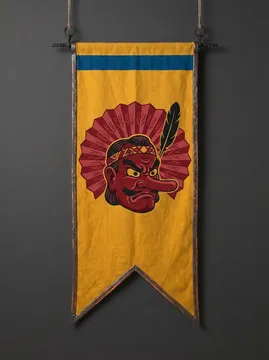 Ashinoha 6 wt · Karagane
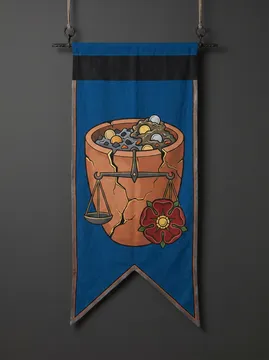 Cindralis 6 wt · Byrewater
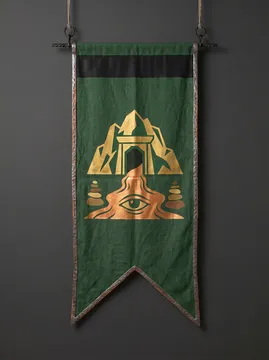 Drennhold 6 wt · Coppermouth
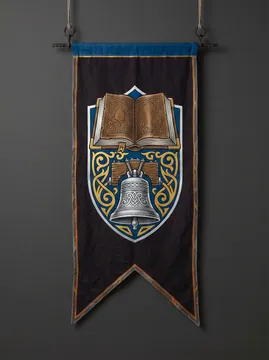 Ferrovane 6 wt · Bellmark
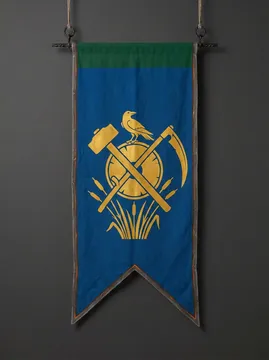 Grivane 6 wt · Crowmarsh
 Ordwaine 6 wt · Overfen
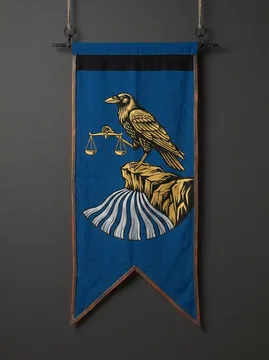 Ravenscarp 6 wt · Nine Rivers
The eight paramount houses vote 48 weights between them. Eight great houses voting with them clear the blocking third, which is why the reserved items are settled before they reach the floor.
III.4 · The weights
The assize publishes a band for each house, not a figure. Figures were published at one early assize, two houses went to war over the result, and the practice was dropped. A house’s band is therefore the only public measure of what it is actually worth, and it is deliberately coarse — five classes cover the whole range from a fishing port to a continent. The band decides two things: how many weights the house votes at the Table, and how much ground it holds on the map.
| Band | Weights each | Houses | Total weights | Hexes held |
|---|---|---|---|---|
| Paramount | 6 | 8 | 48 | 5 |
| Great | 4 | 21 | 84 | 4 |
| Middling | 3 | 22 | 66 | 3 |
| Minor | 2 | 15 | 30 | 2 |
| Rotten plate | 1 | 5 | 5 | 1 |
- Living delegations
- 71
- Weights voted by houses
- 233
- Weights held in wardship
- 17
- Full floor
- 250
- Majority
- 126
- Two-thirds
- 167
- Enough to block
- 84
The eight paramount houses hold 48 weights between them. If eight great houses vote with them they reach 80, which is over the blocking third, so sixteen delegations out of seventy-one can stop any reserved item. At the other end, the twenty smallest delegations hold 35 weights between them, about a seventh of the floor, and a large bank can afford to retain all twenty.
The five rotten plates hold five weights at the Table and five of the Ring’s seventy-one votes. At the Table they are nearly worthless; in the Ring they are worth as much as anyone’s. This is the same imbalance that makes a minor plated heir worth more than a province.
III.5 · Cold weights and wardship
Seven plates are cold: the bloodline is dead, but the house, its lands and its ledgers are not. Those houses are still assessed and still owe the charge, so their weights cannot be allowed to lapse, and no dragon is left to vote them. They come to seventeen weights, of which Meldrath of Wickstone holds six on its own, as many as a paramount house.
The Table appoints a warden over a cold house’s weights. The warden votes them and takes a share of the estate’s revenue in return. Wardens are appointed by the floor, usually from among the cold house’s neighbours, and the wardship of Meldrath is the most contested appointment at the Forge.
The three cracked plates were struck off the floor in the first century after the signing and their holdings were broken up between their neighbours. Parts of that settlement are still disputed, the Anvilbrand valleys most of all.
III.6 · The assize
Most of the Table’s conflict comes out of three features of the survey.
i. Indirect holdings are counted.
Clause II stops a house from growing directly, so growth happens through vassals, client states and tribute. A survey that counted only what a Wright holds in its own name would miss most of what the house controls, so it counts the whole structure instead. Where that structure ends is arguable in every case, and arguing it is most of what the survey does in practice.
ii. Bands are coarse, so only thresholds matter.
A war that gains a house two river valleys usually leaves it in the same band, and its weights do not change. A house sitting just below a band line can cross it with one cheap campaign. Every embassy keeps a list of which houses are near a line, and this is where the Table’s incentive to go to war actually sits.
iii. Timing is used as a weapon.
A house that has just won a war wants an extraordinary assize straight away, while the gains are still intact and visible to a surveyor. The house that lost wants to wait for the ordinary assize, by which time a vassal may have slipped away again. Petitioning early is a public claim to have won something, so houses sometimes petition when they have not.
The surveyors’ right of entry is the sharpest power the assize has and the least settled. A dwarven hold measures as a single gate from the air while holding far more below it, so the survey wants its people inside the hold and the holds refuse them. One of the great dwarven houses has kept its gates shut to the survey for two cycles. Nothing in the Table’s procedure says what happens next.
III.7 · What the Table decides
| Competence | What it actually produces | Where it fails |
|---|---|---|
| Resource distribution | Grain and ore quotas in famine years, joint granaries, the schedule of the charge. | The quotas are carried by mortal factors and guarded by mortal garrisons. A house that ignores its quota has broken no term of the Accords, so no plate reacts. |
| The imperial army | A standing body of engineers, siege train and clearance troops, plus quotas of men a general call can raise from members. | Nobody has settled whose people die or who commands. Only three houses in the ring live on soldiering, so those three would supply most of the officer corps. |
| Statute | Law that binds members because they consented to it, enforced in members’ own courts. | The iron has never responded to a statute. Plate-readers know it and say so in public. |
| Recognition of borders | The act that turns a conquest into weights at the next assize. | Recognition can be withheld for decades, so a house can hold land it is not permitted to be counted for. |
| Foreign policy | Envoys, tariffs, and treaties with unplated kingdoms and with whatever lies past the coast. | There is a standing committee on the unsigned, and the Forge’s own registry refuses to acknowledge it, because officially the Unbound are not a category. The two offices have been deadlocked over this for eighty years. |
| Science | Joint commissions to fund work no single house can afford, or wants to be seen paying for. | The two questions everyone wants answered concern the iron itself. Funding either needs the houses most exposed by the answer to vote for it, so neither has drawn a funding vote. |
| Exploration | Charters over land that no dragon may lawfully hold in its own name. | This was the original purpose of the institution, and houses opposed to it say so every time a charter is proposed. |
Reserved items need two-thirds of the floor. By long practice they are the rate of the charge, a general call of the imperial army, an extraordinary assize, a wardship, and any charter of joint holding.
III.8 · A fifth clause
A fourth clause was beaten onto the plates two hundred years ago, so the Accords can be amended. The Table is the only place a fifth could be assembled, but passing one is business for the Ring: every warm plate has to agree, and then the forge has to assent. The forge has refused seven of the nine petitions for new iron put to it and gives no reasons.
No signatory may make war upon another signatory.
That is the text the union faction wants. It has a working majority at the Table and cannot get unanimity in the Ring, because the two chambers count different things — the faction holds about 55% of the weights and about 52% of the plates, and one warm plate voting against defeats the clause.
The faction’s problem is therefore a short and public list of holdouts, and persuasion has not moved any of them in sixty years. The smallest of them is a house with a single living name, one weight, and a stated position that the Accords should be allowed to lapse rather than extended. It cannot be outvoted, and nothing it wants has been offered to it.
III.9 · Where the houses stand
A house’s position follows its kinship more reliably than its temperament.
- Union
- Undivided houses, Corvantine in institutional style, concentrated in the large weights. Their case is economic: wars between members burn the tax base and the loan books the great houses live on, and pooling mortal armies costs an Undivided Wright nothing it values. They want the imperial army made real, a fifth clause passed, and joint charters used wherever a charter will fit.
- Toleration
- Most of the middle of the floor, and most of the houses whose stake in the Accords is unsettled. Their case is that small wars are what has kept Clause I from being tested for two hundred years, and that an army with no dragon over it becomes a usurper in a bad year. They add that a Table able to outlaw war would be able to outlaw other things later.
- Particularism
- Kinsworn houses, strongest in the dwarven holds and among the smaller peoples. A general call of the imperial army would mean their own people fighting over another people’s river valley, and their whole position is that they stand with their own. They are weak at the Table and decisive in the Ring, where one plate is one veto.
- The elven refusal
- The elven lines will do treaty business and will not accept statute, on the grounds that they are their Wright’s contemporaries rather than anyone’s subjects. In practice they attend, vote on money, and abstain on law.
The result is a deadlock that has held for about a century. The faction that wants union has the majority and cannot reach the threshold. The houses that can block it are the ones union would reduce, so they have no reason to move.
III.10 · The Bound at the Table
The Bound cannot hold a plate. The fire answers blood, and the forge has been silent at seven of the nine petitions for new iron. A chamber that apportions seats by holdings has no such obstacle, and several Bound powers are large enough to be assessed as great houses.
They attend, they speak, they pay the charge, and they do not vote. The floor calls this the paying gallery. A bill to grant them weights has sat on the order paper for sixty years without reaching a division. Their argument for it is the one they have always made, now with a bill number attached: who is counted was settled by which bloodlines happened to be in a room eight hundred years ago, and no other reason has appeared since.