
Pardahni
Pardahni holds a frontier, and its soldiers deal with raiders, migrations and unplated kingdoms that the Accords leave outside the treaty's protection. A second revenue comes off Pardahni's own fields.
Pardahni is Undivided. It wears catfolk shape because a Wright at the Forge must wear something, and it treats an appeal to common blood as a category error. The tradition is divine. Its orders hold one moral extreme or the other, and both wings read the Accords as a compromise, disagreeing only about what with.
The holding
the water tank Road — the herd that pays rent for grass
Short grass on red badland gravel, a rented caravan stage, cattle pens, no boundary stones
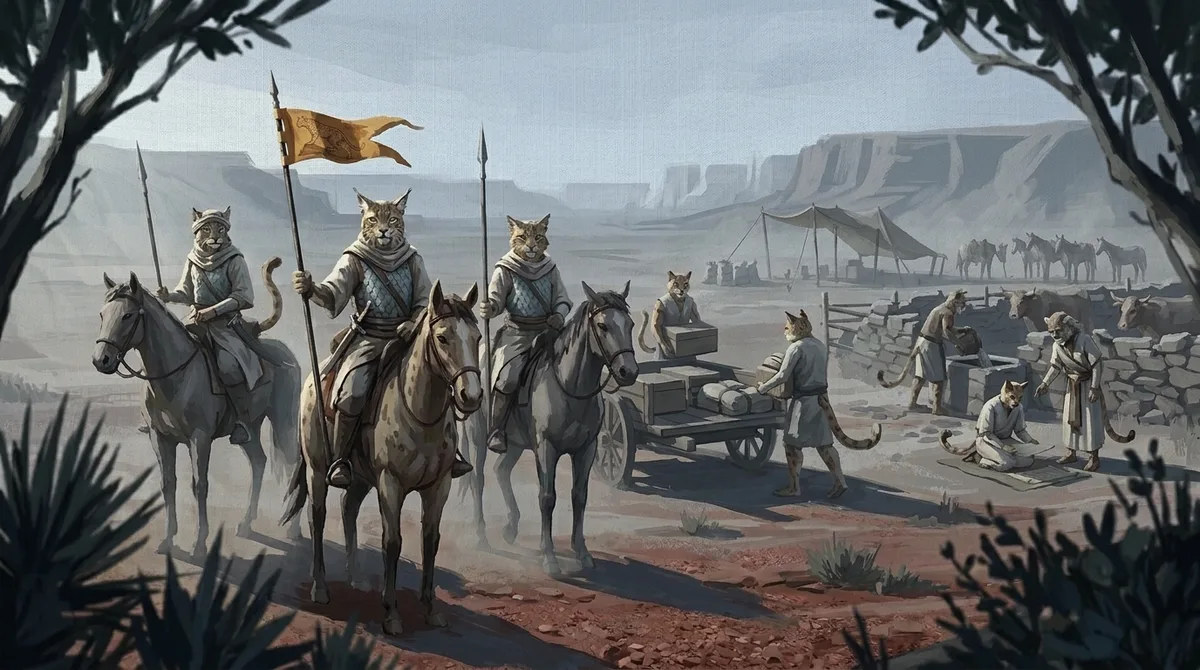
North of the Aurelmarch plain the ground turns to red badland gravel and short grass, which carries cattle for eight months before the August heat closes the pasture. No boundary stones have been set in it, and the survey lists the whole run as Coltfold remount pasture, which is what the caravan stage and the pens stand on. The Cistern Road comes down off the Sunjara canyons through Meketri Crossing and ends at the Solmarch barge head, and there is no other watered ground on it between the badlands and the barges. Sorrenmark's rye begins three days south-west, and Vaddrek's oxen road comes off the foothills to the north-east.
Connections
Escort and carriage earn more here than beef does.
Allies takes this house’s side 3
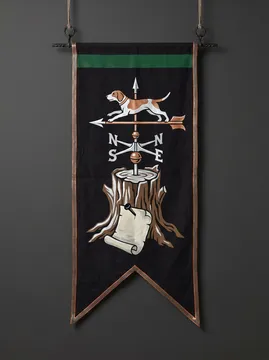 Maeryvane 24 Four wagons of salt beef and oats a month go up the road to Maeryvane, and Maeryvane's lawyers supply the argument that keeps Pardahni's stock stages off the tax survey. The beef price has not moved in twenty years.
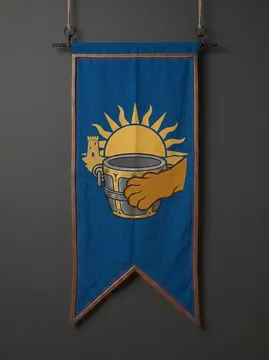 Sekhemra 25 Pardahni's riders escort Sekhemra's charcoal trains and horse lines, sixteen to a train, paid in charcoal and remounts and never in writing, because a written contract would make Sekhemra answerable for what the riders do. Half of Sekhemra's iron output goes back the other way for wheel tyres, chain and pen fittings.
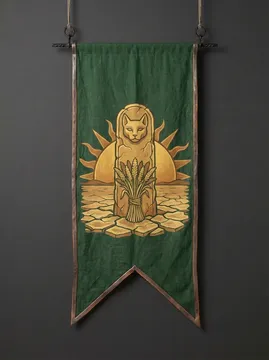 Meketri 37 Two of Meketri's nine wells carry water rights for Pardahni's road, cut into a tomb wall and copied onto papyrus for the drovers. Pardahni draws four hundred barrels a season and pays in hides.
Neutral trades, and no more than that 2
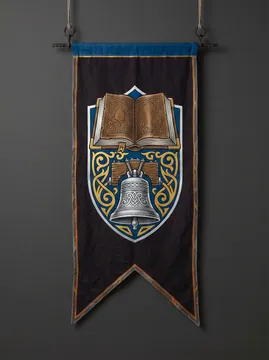 Ferrovane 50 Pardahni's road carries thirty or forty of the Reach's dead down to the river each year, and Ferrovane's toll house charges a third extra on anything with a body in it. Pardahni pays and records it as an insult; going round the toll house adds nine days.
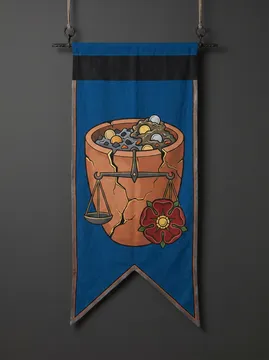 Cindralis 57 Cindralis buys Pardahni's stage rents for less than they are worth and takes the contract in two copies sealed two different ways, because Pardahni's ground has no boundary markers a deed could describe. When a payment failed in 803 one copy was refused at the Forge over the order of the signatures, and the whole sum had to be reclaimed elsewhere.
Enemies has something open against it 1
The full account — 6 houses, 9 arrangements
Escort and carriage earn more here than beef does. Seventeen names ride, sixteen to a train, taking Sekhemra's charcoal down from the spine foot for a price in charcoal and remounts that neither house will put in writing. The Reach dead go the other way, thirty or forty dry cases a year to the Solmarch barge head, where Ferrovane's toll house charges a third again on anything with a body in it and no alternative stage comes in under nine days. Two of Meketri's nine wells carry registered shares for the road, paid for in hides and cut into a tomb wall at the Reach. Maeryvane's ironletters argue that a rented stage is not an assessable holding and take salt beef at a twenty-year price for the argument, and the Coltfold impounds any beast that strays.
-
The Cistern Road carries the Reach dead down off the plain to the Solmarch barge head, thirty or forty a year in dry cases, and Ferrovane's toll house charges a third again on anything with a body in it. Pardahni pays the surcharge, records it as an insult, and the shortest stage that avoids the toll house adds nine days.
-
Pardahni escorts the Sunjara charcoal trains and horse lines from the spine foot to the barge head, sixteen riders to a train, paid in charcoal and remounts. The two houses are kin on the water records office and neither will put the escort in writing, since a written escort contract at Ferrovane would make Sekhemra answerable for what the riders do on Corvantine ground.
The Sunjara iron furnaces turn out ninety tons of bar and cart iron a year and the Cistern Road takes half of it for tyres, chain and pen iron. Both houses settle in Sekhemrite form, cut into a wall at Pardahni, which no Corvantine records office will accept as an instrument and neither of them has needed one to.
-
Salt beef and oats come up the Cistern Road to Maeryvane, four wagons a month out of Pardahni's pens. Pardahni's drovers water at the combes on the way and Maeryvane's foresters count the beasts through the charter gate in both directions.
Maeryvane's ironletters supply the argument that a rented caravan stage is not an assessable holding, which has kept the Cistern Road off the survey through two re-surveys. The fee is the beef contract at a price fixed for twenty years, and neither house has put the connection between the two in writing.
-
Two of the nine wells carry registered shares for the Cistern Road, cut into the wall of a Meketri tomb at the Reach and copied on papyrus for the drovers. Pardahni draws four hundred barrels a season for the cattle pens and pays in hides, and neither house has told the survey that a water right exists on ground it does not list.
-
Pardahni's caravan stage and cattle pens stand on Sorrenmark remount pasture under a rent renewed each spring. Sorrenmark has raised it in every year since 806 AF and Pardahni has paid every time, there being no other watered ground between the badlands and the barge head.
After the 812 AF raise Sorrenmark began impounding Pardahni cattle found off the leased ground, arguing that where there are no boundary stones there is no boundary. Pardahni's escorts have twice cut the impound fence, and Ferrovane holds an action from each side and has heard neither.
-
Cindralis discounts the Cistern Road's caravan-stage rents at eleven per cent and takes the paper in two copies, one sealed in Amasekan seating order and one witnessed at the cattle pens, because Pardahni's ground carries no boundary stones a deed could describe. When a stage went unpaid in 803 the Amasekan copy was refused at the Forge for a junior seal and the whole sum had to be reclaimed at Ferrovane.
Drovers on the Solmarch road price Pardahni's escorts above the house's recorded allowance, and say the riders often carry other instructions. Said in the Aurelmarch
The public record
- Plate
- 22 of 81
- Seat
- Meketri Crossing
- Holding
- the water tank Road
- Region
- the Aurelmarch
- Position
- hex 11,15 in r4c3
- Extent
- as much ground as Clause II allows (8 of 10)
- Culture
- Sekhemri
- Thick on this ground
- Corvantine, Sekhemri
- Iron
- Warm
- Living names
- 17
- Roster
- Established
- Ancestry
- Catfolk
- Kinship
- Undivided
- Major activity
- Marchward
- Minor activity
- Furrowhold
- Tradition
- Divine
- Alignment
- NE
- Stake
- Even
- Band
- Middling
- Weights
- 3
Arms
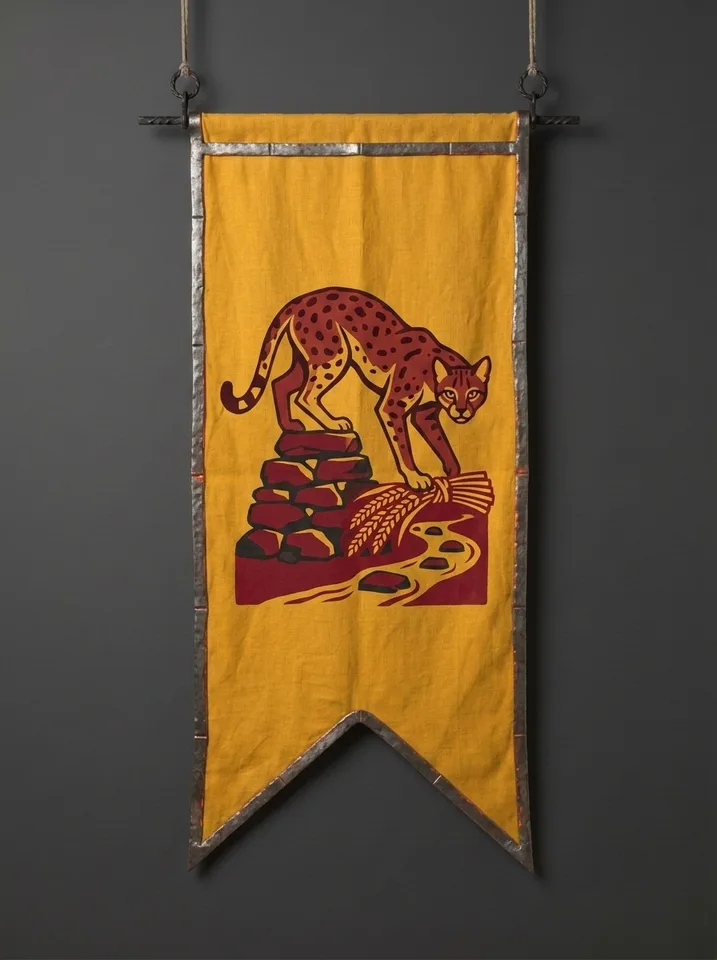
A lean spotted desert cat crouched on a boundary cairn beside a river crossing, a sheaf of millet crushed flat under one paw.

Or, a tower Gules; in base a garb Gules; a bordure of warm iron. (Plate 22; seventeen living names.)
The field colour is the house's tradition and the bound edge is the state of its plate, and neither is the house's to choose.