
Isperil
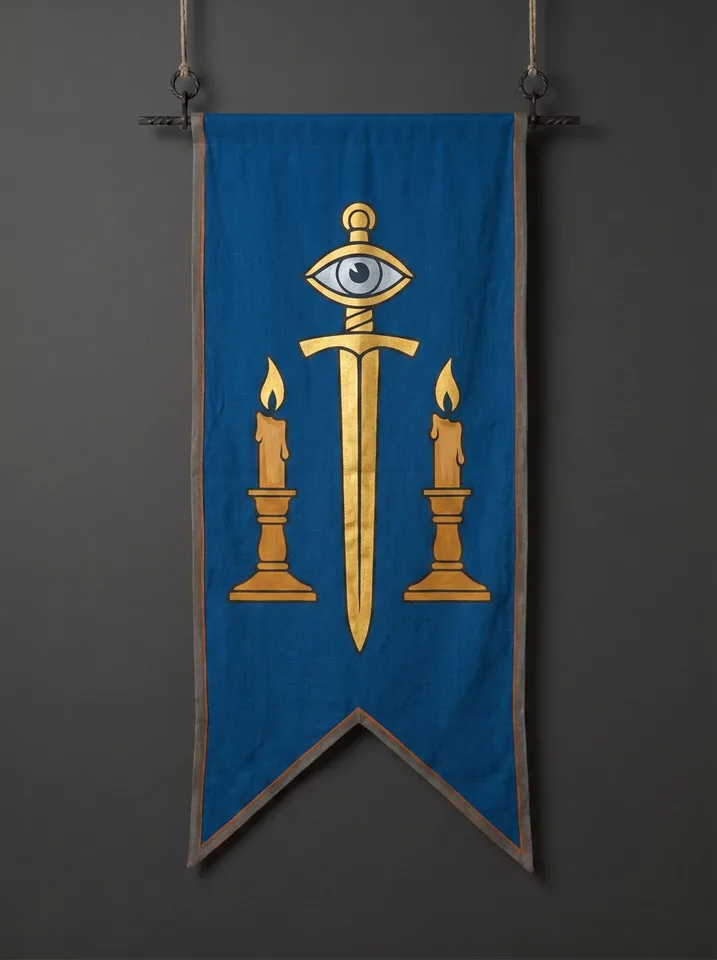
Plate-readers. When a house needs to know whether the thing it intends is a breach, it pays Isperil to say so, and pays more for the answer it wanted. A quiet apparatus reports to Isperil.
Isperil calls its position Contemporary. It treats its relationship with elves as one between contemporaries, a distinction it has defended at the Forge since the signing. Its institutions are arcane. Mage-cities and chartered guilds run on written procedure, and the tradition supplies most of the plate-readers the ring argues in front of.
The holding
the Winter Stair — the signature that is not Kazdrunn
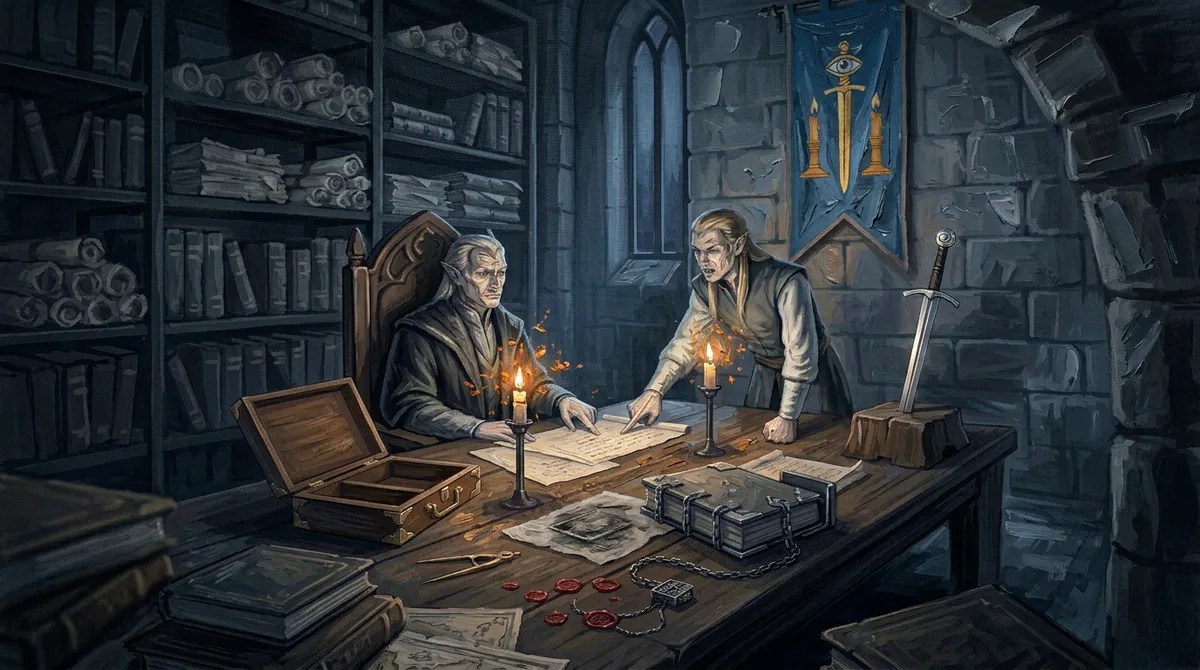
A stair and one gate cut into the leeward flank of an Emberdeep hold, grazing above
A stair and one gate on the leeward flank of an Emberdeep hold, with summer grazing on the shelf above and the hold's own traffic passing at the foot. Nothing grows above the treeline in this country: mutton, cheese and stored grain come up the steps from the grazing, weighed on the Kazdrunn hundredweight and entered in another house's books before they are eaten. Coppermouth and its three road forts lie a week east where the underground passages surface, and past them the cavern roads run out towards the Reach. Winter shuts everything but the stair, and the water comes off the hold's cistern on a share renewed each year.
Connections
Two living names run a plate-reading practice out of one gate, and whatever either of them lodges is the act of the whole line.
Allies takes this house’s side 2
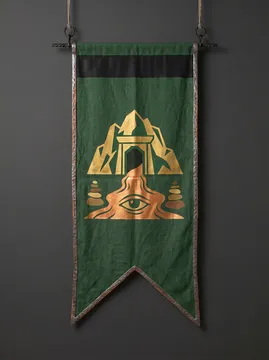 Drennhold 64 Isperil is the only non-dwarf signature on Drennhold's boundary case, and signs it again every time the Forge takes the question up. Drennhold pays in mutton, cheese and grain off its summer pasture.
 Wraymoor 73 Isperil's clients pay late, so it sells their unpaid bills to Wraymoor for four-fifths of what they are worth. Neither house has more than three living members, so if either one fails the debt falls on its whole family, and Wraymoor writes that on every bill it buys.
Neutral trades, and no more than that 2
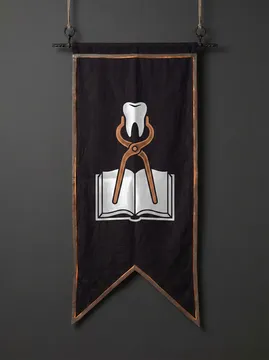 Talionwe 04 In 233 a tunnel was flooded with a dragon inside it, and these two argued opposite sides of the case. The courts accepted both arguments, and two of the eleven rulings on killing a dragon indirectly came out of it.
 Cuiveril 43 Isperil's whole practice rests on eleven old rulings it bought from Cuiveril's archive in 771, and it pays a yearly fee to go on reading them. The set it reads from is fifty years out of date.
Enemies has something open against it 1
The full account — 5 houses, 6 arrangements
Two living names run a plate-reading practice out of one gate, and whatever either of them lodges is the act of the whole line. The trade is the eleven rulings on indirect killing: the reading set was bought from the Coldhearth archive in 771 and the fee renewed while the copies are not, and Cuiveril has offered the current set four times at a price the house has four times declined. Drennhold pays for the elven concurrence on the gate-count brief, the one non-Kazdrunn signature, and calls the payment grazing rent in every account it keeps. Steinvald has twice moved at the Forge to have that concurrence struck as an interested filing. Wraymoor discounts the retainer bills at eighteen per cent and notes in the margin what a default by either house would be.
-
Isperil signs the elven concurrence on the gate-count brief, the only hand on it that is not Kazdrunn, and lodges it again with a fresh date whenever the Forge takes the question up. Drennhold pays for the signature as grazing rent and calls it grazing rent in every account it keeps.
Mutton, cheese and stored grain go up Isperil from the summer grazing above the underground passages, entered in the hold's books as grazing rent received rather than victuals sold. Isperil leaves the entry as it stands.
-
Wraymoor discounts Isperil's retainer bills at eighteen per cent, which is what a plate-reader's fee paper fetches when the house behind it is hair-trigger. Wraymoor is hair-trigger too, and notes in the margin of every bill that a default by either would be the act of a whole line.
-
The fourth and the ninth of the eleven rulings on indirect killing were pleaded by these two houses on opposite sides, both arising from a underground passage flooded above a gate in 233 AF with the hold's Wright inside it. Talionwe argued that water released into one's own workings cannot be a Clause I act; Isperil argued that a hold is a gate and a gate can be shut, and the second court accepted that without disturbing the first.
-
Steinvald has moved twice at the Forge to have the elven concurrence struck as an interested filing, on the ground that a house of two living names cannot bind a reach. Isperil lodges it again each time, and Steinvald's practice loses a little standing whenever the Forge declines to rule.
-
Isperil's practice runs on the set of the eleven indirect-killing rulings it bought from Cuiveril's archive in 771, and the reading fee is renewed annually while the copies are not. Cuiveril has offered the current set four times, at a price Isperil has four times declined.
Clerks on the Stair say the fourth ruling is cited after the Winter Stair set has been read, though the fee is absent from the public account. Said in the Emberdeep
The public record
- Plate
- 11 of 81
- Seat
- Long Vigil
- Holding
- the Winter Stair
- Region
- the Emberdeep
- Position
- hex 17,7 in r2c5
- Extent
- a single holding (1 of 10)
- Culture
- Elder Reaches · among strangers here
- Thick on this ground
- Kazdrunn, Sekhemri
- Iron
- Warm
- Living names
- 2
- Roster
- Hair-trigger
- Ancestry
- Elf
- Kinship
- Contemporary
- Major activity
- Ironletter
- Minor activity
- Cipherhouse
- Tradition
- Arcane
- Alignment
- LG
- Stake
- Even
- Band
- Rotten plate
- Weights
- 1
Arms
An unblinking silver eye set into the pommel of an upright unsheathed sword, a burning taper on either side, both burned down to exactly the same length.

Azure, a balance and a mullet Or, borne side by side, equal, and undivided; in base an eye Or; a bordure of warm iron. (Plate 11; two living names.)
The field colour is the house's tradition and the bound edge is the state of its plate, and neither is the house's to choose.