
Dunmoral
Dunmoral governs as an order rather than a court, and its position on the treaty is a matter of doctrine rather than interest. Dunmoral also holds agency charters.
Dunmoral is Kinsworn, and means it. Its Wright wears human shape as a member of that people: the oldest and largest member of the family, with its gods, inheritance law and opinion of the neighbours. Its position can be negotiated, but its loyalties can be shamed. Its institutions are occult, ruling through cults, debts and information rather than office. This is the tradition that has benefited most from the arrangement. A divine establishment sits alongside the occult institutions and answers separately to the house. Their overlap at the marriage table is the one nobody has divided.
The holding
Sunjara Rim — the stamp on the northern corpse road
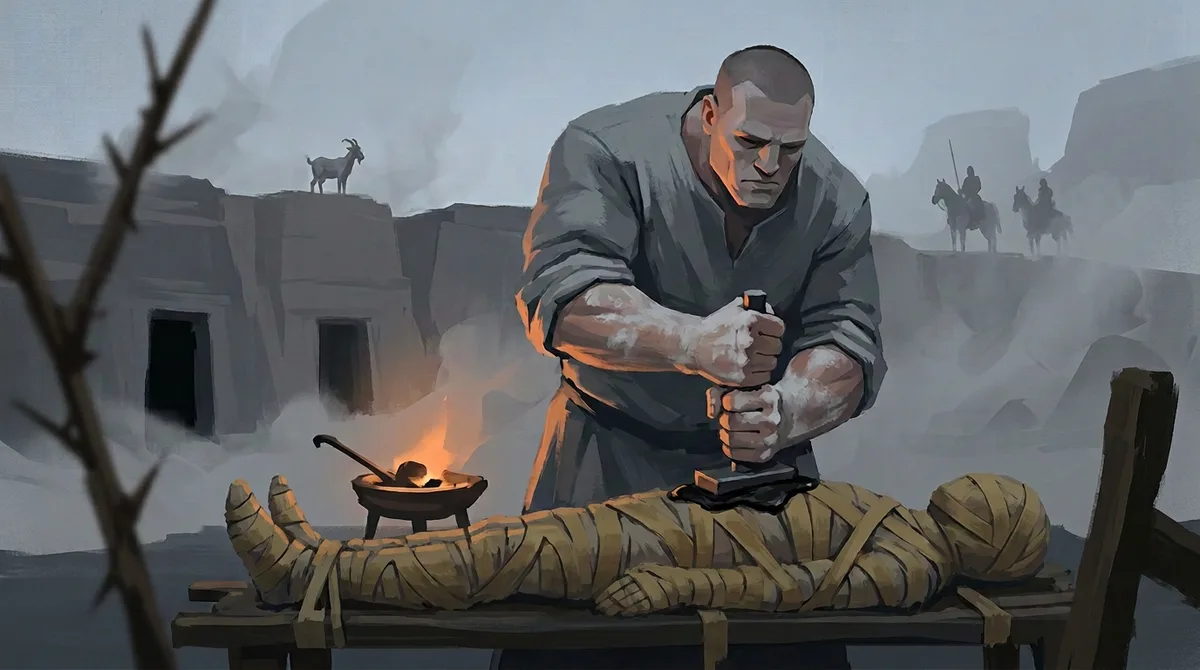
Millet terraces and goat ground along the Sunjara canyon rim, tomb underground passages beneath, north road through
The rim carries millet on terraces cut wherever the cisterns reach, goats on everything above them, and underground passages running back into dry burial caves a day's walk under all of it. Cattlegate sits astride the north road where the terraces end, with the underground passage mouths below the village and the washing tanks between. Nothing here is watered that is not on a share, and the shares are older than the road. Rimhook stands two days north on the tundra shoulder, Cistern Nineteen beyond it at the rim crossing, and the cavern roads run south under the badlands towards the barley flats of the Hundred Shares.
Connections
Burial is the trade, and the stamp travelling with each body is the valuable part.
Allies takes this house’s side 1
Neutral trades, and no more than that 4
 Wexhollow 15 Wexhollow's men escort Dunmoral's corpse caravans over the tundra at twelve marks a stage, carrying one body in forty for nothing. Dunmoral's millet comes back the other way, half of it set against the escort bill.
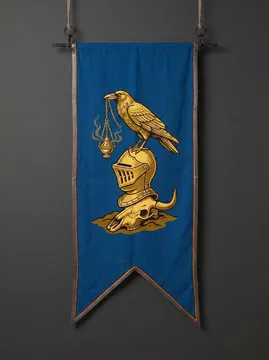 Corvane 38 Corvane keeps the southern stage of the corpse road and takes two marks a body and a tenth of the offerings, all of which goes north because the stamp on the paperwork is Dunmoral's. Corvane has asked three times for a stamp of its own.
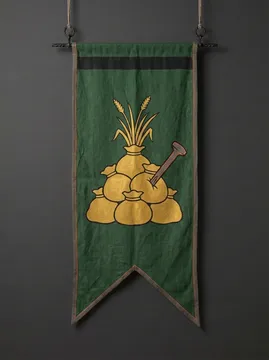 Drusenberg 62 Drusenberg lent 26,000 silver against nine years of Dunmoral's tomb rents, and takes repayment in oil credits because a northern assembly will not recite a debt counted in water shares. It raises the price every spring, on the argument that a house living off burials is worth less if the treaty collapses.
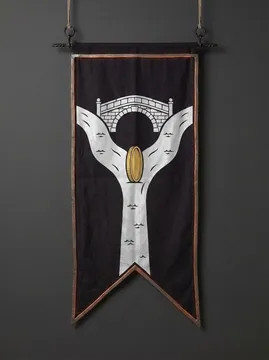 Nuirendil 76 Northern bodies bound for the dry burial caves are landed at Nuirendil and go up the road under Dunmoral's stamp, six marks a body at the wharf and the rest at the top. Nuirendil keeps a count of its own.
Enemies has something open against it 3
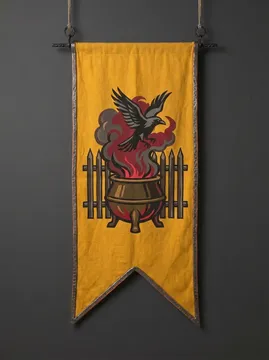 Brannhold 39 Brannhold takes the poorer half of the bodies landed there into its own burial ground and charges nothing to carry them, which Dunmoral's registrars have twice called a fraud upon the dead at the Forge. Neither complaint named a sum, because traffic that pays no carriage is counted nowhere.
 Sarventhal 69 Sarventhal's cistern supplies nine permanent water shares to Dunmoral at a rent fixed in 604 and now worth about a third of what a share sells for. It has petitioned eleven times to reopen the rate, and Dunmoral answers each one with the text carved into a tomb wall, which Sarventhal cannot dispute without asking the family that owns the grave to open it.
 Caelithil 74 Caelithil's priests preach that the treaty was a bargain with evil and the plates should never have been struck, and Dunmoral has barred Caelithil's dead from its burial tunnels for sixty years over it. Caelithil's funeral traffic now goes the long way round at nearly twice the cost, and Dunmoral counts the diverted business as part of the argument.
The full account — 8 houses, 10 arrangements
Burial is the trade, and the stamp travelling with each body is the valuable part. A body landed at Nine Moorings pays six marks at the wharf and the balance at the rim, then travels the north road under a Cattlegate stamp, including the southern stage. Corvane's temple gate keeps two marks per body and a tenth of the offerings. Wexhollow supplies escort over the shoulder at twelve marks a stage, half paid in millet. Drennhold's retainer is entered at Coppermouth as a burial account so the gate-count argument reaches the water records office in a Sekhemrite hand; the registrars drafting it are not told which brief it covers. Terrace families pay their share rent in burial carriage. Corvane has asked three times for its own stamp.
-
Northern bodies bound for the dry burial caves are landed at Nuirendil and go up the north road under Dunmoral's stamp, six marks a body taken at the wharf and the remainder at the rim. Nuirendil keeps a count of its own and will not produce it.
-
Millet off Dunmoral's terraces goes to Wexhollow at the rim price, and half of it is set against the escort account instead of paid. Dunmoral's steward proposes each autumn that the whole should be, and each autumn Wexhollow declines.
Wexhollow's men take the corpse caravans over the tundra shoulder where the north road leaves the rim, twelve marks a stage and one body in forty carried free. Dunmoral's stamp travels with the caravan; Wexhollow's rolls record the stage and not the load.
-
Drusenberg lent 26,000 silver against nine years of tomb rents on the Sunjara canyon rim, and takes repayment in Falkvald oil credits at Brannhold because a Vaskarni assembly will not recite a debt denominated in water shares. Drusenberg reprices the loan every spring on the argument that a house living on burial is worth less if the ring opens, and Dunmoral's registrars answer the letter in writing each time.
-
Caelithil's chaplains preach that the ring was a settlement with evil and that the plates should never have been struck, and Dunmoral's temple gate has barred Caelithil's dead from the Sunjara underground passages for sixty years on the strength of it. Caelithil's burial carriage now goes round to Cistern Nineteen at nearly twice the rate, and Dunmoral counts the diverted carriage as part of the argument.
-
Cistern Nineteen carries nine of the perpetual washing shares Dunmoral's underground passages draw on, at a millet rent set in 604 that still stands. The rent is now worth roughly a third of what a share fetches at the records office.
Sarventhal has petitioned the records office eleven times to reopen the 604 rate. Dunmoral answers each petition with the text cut into a tomb wall at Dunmoral, which Sarventhal cannot deny without asking the family that owns the grave to open it.
-
Drennhold retains Dunmoral's agency so that the gate-count argument reaches the Reach water records office in a Sekhemrite hand. The retainer is entered at Drennhold as a burial account, and Dunmoral's registrars are not told which of their briefs it pays for.
-
The temple gate at the Sixth Stage keeps the southern stage of the corpse road and takes two marks a body and a tenth of the offerings, remitted north because the stamp on the carriage is Dunmoral's. Corvane has asked three times to be given a stamp of its own.
The Forge has it that Cattlegate's stamp earns more than its terraces, though the records office records no separate figure for either. Said in the Sunjara Upland
The public record
- Plate
- 72 of 81
- Seat
- Cattlegate
- Holding
- Sunjara Rim
- Region
- the Sunjara Upland
- Position
- hex 22,3 in r1c6
- Extent
- as much ground as Clause II allows (8 of 10)
- Culture
- Sekhemri
- Thick on this ground
- Sekhemri, Falkvald
- Iron
- Warm
- Living names
- 24
- Roster
- Policy
- Ancestry
- Human
- Kinship
- Kinsworn
- Major activity
- Sanctum
- Minor activity
- Agency
- Tradition
- Occult, with Divine in tension
- Alignment
- N
- Stake
- Holds
- Band
- Great
- Weights
- 4
Arms
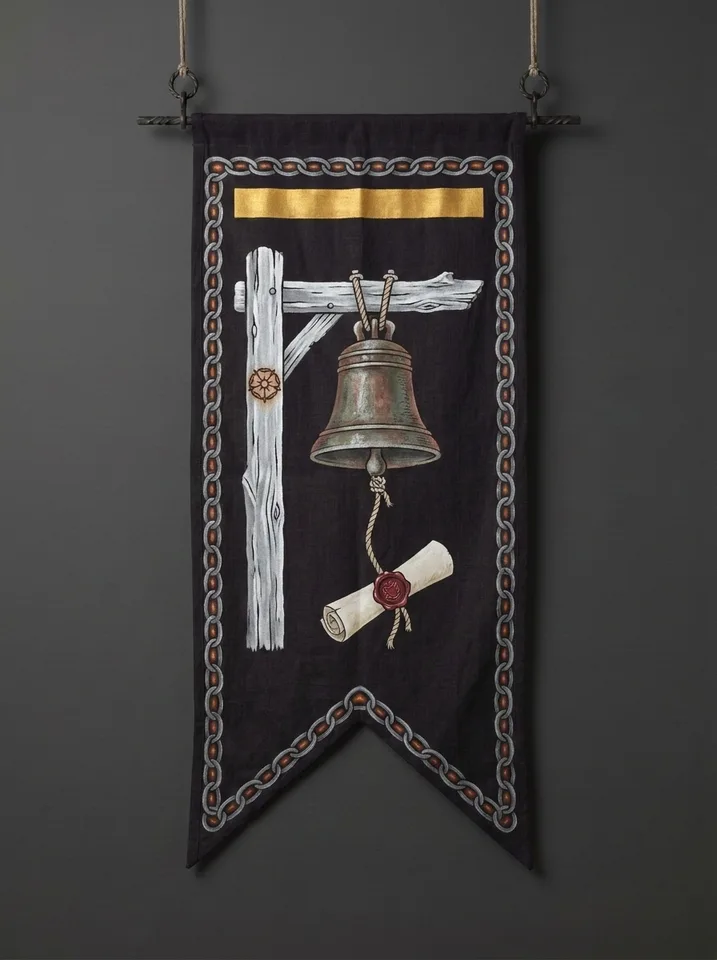
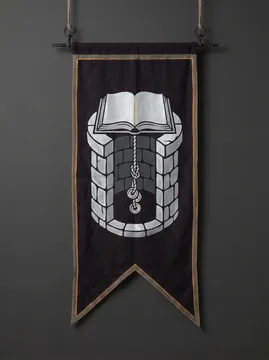
A temple bell hung from the crossbar of a cattle gate, a wax-sealed writ tied to the bell-rope, a five-petalled rose burnt into the gatepost.

Sable, party per pale by a line Argent, a flame and a rose Argent; in base a writ sealed Argent; a chief Or; a bordure of warm iron. (Plate 72; twenty-four living names.)
The field colour is the house's tradition and the bound edge is the state of its plate, and neither is the house's to choose.