
Drusenberg
The vaults are the point. Drusenberg holds obligations in ledgers that survive the loss of a field or a town. A second income comes from Drusenberg's forges.
Ask Drusenberg whose it is and the answer is the ring's. Its humans are a population it administers, which makes the house a reliable party to an agreement and an unmoving one in a quarrel. Its institutions are primal. The border is a wide thing rather than a line, the herds move with the season, and the treaty reaches Sedgemoor at about the strength of a rumour. The house also carries An occult establishment, of long standing and no goodwill toward the primal side. Both are indispensable, so neither has been suppressed.
The holding
the Ostrovek Weirs — the discount house above the weirs
Gravel rise above the Rooken causeway head, alder and willow beds, timber wharf, no ploughland
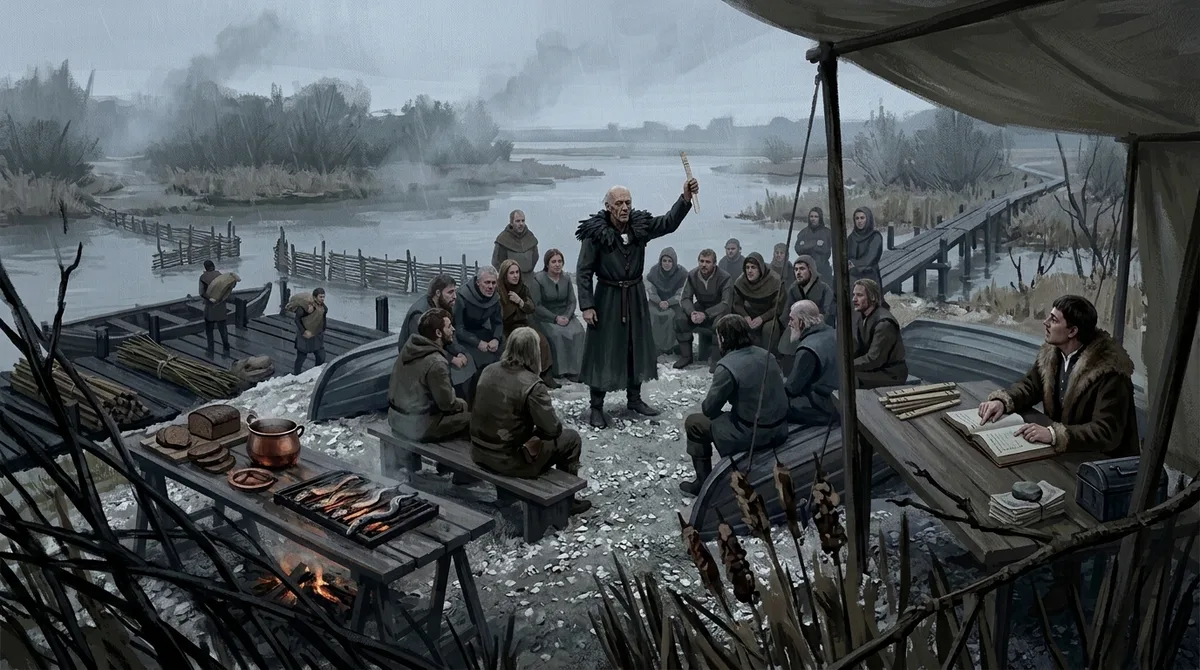
Shell and gravel make a rise above the causeway head, the only ground on this reach of the Rooken that stays dry through a spring tide. Alder and willow beds run behind it and the weirs stand in the channel below, so eels, props, willow bundles and a dark timber that will not rot are what the Ostrovek Weirs sell, and not an acre is ploughed. The sound carries everything: Rookenmarsh a day and a half north on its pilings, Thelanor's enclosure three days east on the plank road, Kazdrun's gate south across the peat. Wheat arrives by lighter from the Ferravant and is landed at the timber wharf.
Connections
Sedgemoor keeps a ledger beside a Vaskarni rememberer's oral account, and the figures sometimes differ.
Allies takes this house’s side 2
 Wexhollow 15 Drusenberg cannot enforce a seizure in a foreign court, so Wexhollow's company does it instead. It is paid in water shares Wexhollow would otherwise buy at auction, worth about seven months of its supply.
 Lysathiel 56 Lysathiel bought a third of Drusenberg's Meldrath debts in 812 at a tenth under their value and asked nothing about whose name was on them. The sale is recorded on both sides as a routine rebalancing.
Neutral trades, and no more than that 4
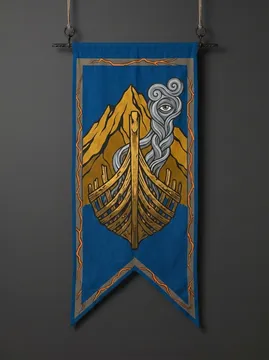 Emberkeel 42 Drusenberg took Emberkeel's notes at full value for thirty-one years and now takes them at a sixth less. Its ledger gives no reason for the change.
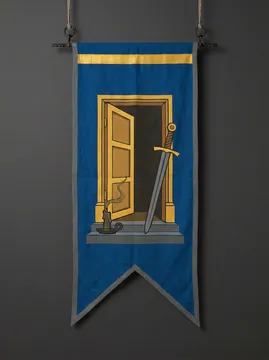 Meldrath 55 Drusenberg is owed eight thousand crowns by Meldrath, taken in 801 against supplying its drill field. Northern custom requires the debt read out at the summer assembly in the debtor's name, and there is no name left to say, so the reciter reads out the place instead and everyone present notes the substitution.
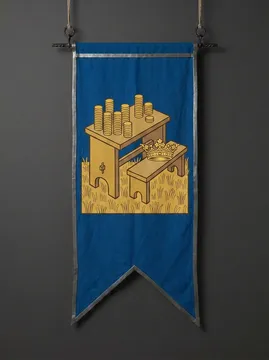 Valdrenne 71 Valdrenne ships twelve hundred quarters of wheat a year round the sound to Drusenberg, which has no farmland and no intention of buying through foreign market halls. Freight, insurance and the river toll come to a fifth of the delivered price, and the toll figure is given aloud and never written down.
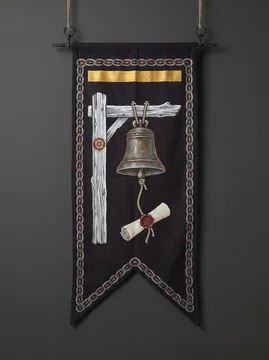 Dunmoral 72 Drusenberg lent 26,000 silver against nine years of Dunmoral's tomb rents, and takes repayment in oil credits because a northern assembly will not recite a debt counted in water shares. It raises the price every spring, on the argument that a house living off burials is worth less if the treaty collapses.
Enemies has something open against it 4
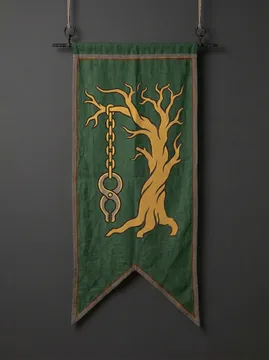 Duskenmoor 06 Duskenmoor's timber rights were granted twice, once by Drusenberg's assembly and once by a village that had no business granting them, and Drusenberg has held the second copy since 741. Nobody alive heard both grants, so each house sends a man to the Forge every year to stop its claim expiring.
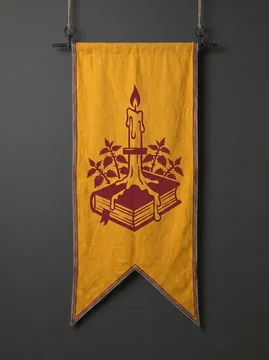 Ostwyck 17 Drusenberg owns the only route to the burial field, ferries the pilgrims, feeds them at its own prices, lends against the collection box each spring, and supplies the timber for the coffins and the roof. It also buried six drowned men in a marsh rather than carry them out to the burial field, and has refused to give up the bodies at every summer meeting since.
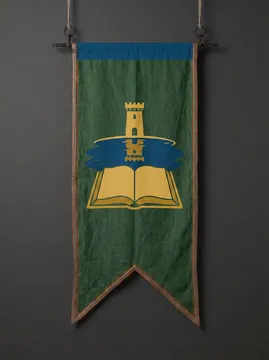 Thelanor 30 Drusenberg sends six clerks a year to Thelanor at fifteen crowns each, and Thelanor teaches them the survey forms as well as the accounts, which is why Drusenberg's paperwork is the only northern paperwork Ferrovane takes without amendment. Thelanor also says the willow beds below the causeway are its own, and asks only that ninety years of Drusenberg's cutting be recorded as licensed. Drusenberg refuses.
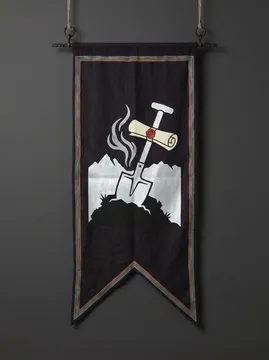 Kazdrun 79 Kazdrun cut its own channel to the river in 807 and now floats its iron past Drusenberg's causeway, taking about a third of Drusenberg's toll income with it, while eleven hundred timber props a year still go the other way to keep Kazdrun's pits from collapsing. Drusenberg calls the channel toll evasion under another name, and the assembly has twice adjourned the case for want of anyone who can recite the original grant.
The full account — 10 houses, 14 arrangements
Sedgemoor keeps a ledger beside a Vaskarni rememberer's oral account, and the figures sometimes differ. It took Emberkeel's gate-notes at full face value for thirty-one years and now discounts them at eighty-four in the hundred, giving each enquirer the same explanation: the rate is reviewed quarterly. Alder props go south to Kazdrun's pits at eleven hundred a year, billed by the bundle and paid by the pit, with the counts still unresolved. Valdrenne lighters twelve hundred quarters of wheat round the sound because Sedgemoor avoids the Corvantine market hall; the mouth toll buried in that freight has not appeared in Vaskaryn's written account. Eight thousand crowns of Aurel Wood paper sit on the book awaiting recitation at the summer assembly.
-
Drusenberg took Emberkeel gate-notes at full face value for thirty-one years and now discounts them at eighty-four in the hundred. Drusenberg's ledger gives no reason and its clerks give the same one to everybody who asks, which is that the rate is reviewed quarterly.
-
Alder props and willow bundles go from Drusenberg to Kazdrun, eleven hundred props a year, which is what keeps the peat pits from closing on the diggers. Drusenberg bills by the bundle and Kazdrun pays by the pit, and the two counts differ every year.
Kazdrun cut a channel from its gate to the Rooken in 807 AF and now floats its blooms past the causeway head, taking about a third of Drusenberg's weir receipts with it. Drusenberg's case at the summer assembly is that the cut is a causeway toll evaded under another name, and the assembly has adjourned it twice for want of a rememberer who can recite the original grant.
-
Drusenberg holds eight thousand crowns of Meldrath paper, taken in 801 AF against the victualling of Meldrath's drill field. Vaskarni practice requires the debt formally read at the summer assembly in the debtor's name; since the Meldrath plate went cold there is no name to recite, so the rememberer reads out the holding instead and everyone present notes the substitution.
-
Drusenberg's boats take pilgrims from the causeway head to Ostwyck for two coppers per person. They provide food on the island for four coppers a day; there is no other route to the cairn field. Each spring, Drusenberg lends money against the oath-house offering box. It is the only loan in Drusenberg's book, and the offering box cannot be seized if Ostwyck fails to repay.
Bog oak for the coffin work and alder for the oath-house roof come down the sound from Drusenberg, about thirty rafts a year. Drusenberg will not take Ostwyck's paper at any discount and is paid on the shingle in oil and salt fish.
The year the Rooken flooded, six Falkvald wintering men drowned off the causeway head and Drusenberg's assembly sank them in the marsh under a stone rather than carry them out to the cairn field. Ostwyck has demanded the bodies at every summer sitting since, and Drusenberg's rememberer answers that the reading aloud on those names is closed.
-
Drusenberg lent 26,000 silver against nine years of tomb rents on the Sunjara canyon rim, and takes repayment in Falkvald oil credits at Brannhold because a Vaskarni assembly will not recite a debt denominated in water shares. Drusenberg reprices the loan every spring on the argument that a house living on burial is worth less if the ring opens, and Dunmoral's registrars answer the letter in writing each time.
-
Drusenberg cannot serve seizure in a Sekhemrite court, so Wexhollow's chartered company serves it, and is paid in water shares Wexhollow would otherwise buy at auction on the canyon rim. Wexhollow's whole holding is bought water, and the retainer covers about seven months of it.
-
Valdrenne lighters twelve hundred quarters of wheat a year down the Ferravant and round the sound to Drusenberg, which has no ploughland and no intention of buying through Corvantine market halls. Freight, insurance and the mouth toll come to a fifth of the delivered price, and Vaskaryn gives the mouth toll figure aloud and not on paper.
-
Thelanor says the willow beds below the causeway head lie inside Thelanor's perimeter and that Drusenberg has cut them for ninety years without leave. Thelanor does not ask for the beds back, only for the cutting to be entered as a licence, which Drusenberg understands perfectly and will not do.
Drusenberg sends six ledger clerks a year to Thelanor at fifteen crowns a head, a Coinvault house on the marsh being unable to get literate men out of the villages. Thelanor teaches them the survey forms as well as the tally, which is why Drusenberg's paper is the only Vaskarni paper Ferrovane's records office will accept without amendment.
-
Lysathiel bought a third of Drusenberg's Meldrath paper in 812 AF at ninety in the hundred and asked nothing about the name on it. Drusenberg's clerks describe the sale as a rebalancing and Lysathiel's describe it as an accommodation between old counterparties.
-
Duskenmoor's timber charter was granted twice, once by the assembly at Drusenberg and once by a village upriver that believed itself competent, and Drusenberg's have held the second copy since 741 AF. Neither house can produce a rememberer who heard both grants, and both send a factor to the Forge each year to keep the claim from going stale.
Vaskarni carters on the sound say the weir receipts fell by a third when the peat channel was cut and the discount book did not move at all. Said in the Ostrovek Sound
The public record
- Plate
- 62 of 81
- Seat
- Sedgemoor
- Holding
- the Ostrovek Weirs
- Region
- the Ostrovek Sound
- Position
- hex 2,14 in r4c1
- Extent
- a small march (3 of 10)
- Culture
- Vaskarne
- Thick on this ground
- Vaskarne, Elder Reaches
- Iron
- Warm
- Living names
- 18
- Roster
- Established
- Ancestry
- Human
- Kinship
- Undivided
- Major activity
- Coinvault
- Minor activity
- Forgewright
- Tradition
- Primal, with Occult in tension
- Alignment
- LN
- Stake
- Breaks
- Band
- Great
- Weights
- 4
Arms
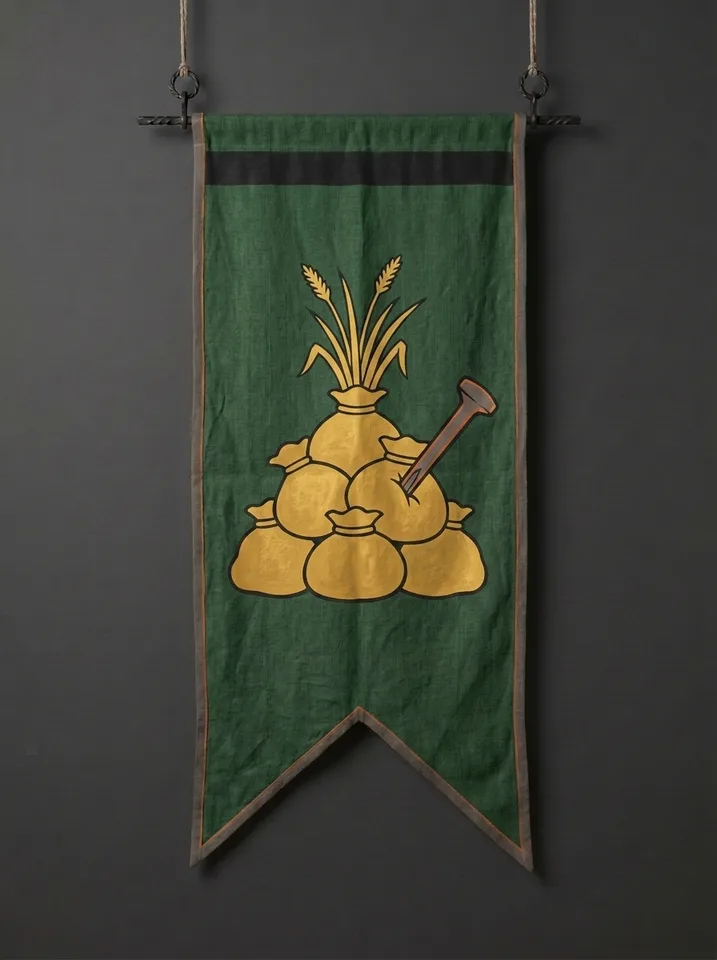
A hill of stacked coin-bags with sedge growing from the topmost one, a smith's punch driven into the hill's side.
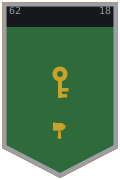
Vert, a key Or; in base a hammer Or; a chief Sable; a bordure of warm iron. (Plate 62; eighteen living names.)
The field colour is the house's tradition and the bound edge is the state of its plate, and neither is the house's to choose.